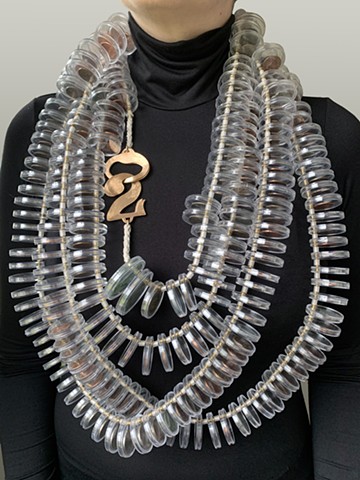
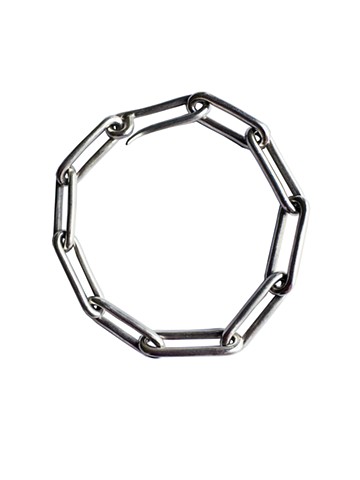
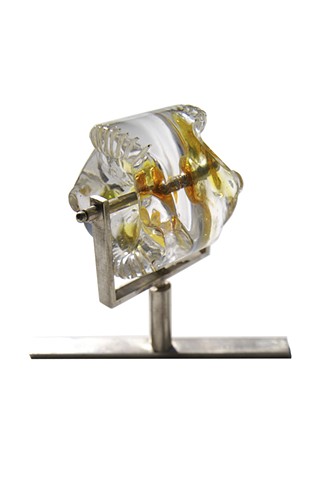
When envisioning algae, one does not picture tiny glass snowflakes; he or she generally imagines pond scum, or the brown film inside the glass of a fishtank. While this common notion of algae is technically correct, scum is actually a collection of various classes of microscopic organisms, one of which, is the diatom. Because of my upbringing as the daughter of two botanists, I have developed an aesthetic appreciation of plants and algae; as far back as I can remember, I recall my father discussing diatoms. His interest in these organisms piqued my own; I specifically recall his claim that diatoms would make beautiful jewelry, and I have viewed them with that potential in mind ever since. I have created an army of body-oriented sculpture that represents diatoms with accuracy. My interest in botanical illustration has influenced the manner in which I depict these organisms as I transform them into jewelry; I strive to retain the features of each particular species of diatom, so that each of my pieces would be able to be identified by a botanist. I integrate sterling silver, carved acrylic, and transparent colored resin into my work; each technique represents a method in which botanists depict diatoms. The transparency of resin and acrylic replicates the effect of a diatom sample on a light microscope slide, cast sterling imitates the solidity of scanning electron microscope images, and intricately pierced sterling sheet mimics botanical line drawings found in scientific journals. The majority of my pieces contains a kinetic component that along with saturated color, adds an element of frivolity to an otherwise literal subject matter. Through my collection, I exalt the diatom for its aesthetic qualities, and allow its form to speak for itself with minimum decorative embellishment.
My thesis collection will be on display at Pratt Institute in the Rubelle and Norman Schafler Gallery from March 30th- April 7th, with an opening reception occurring at 5pm on March 30th.